
WHAT WE HELP WITH · 3–12 yrs
Support for Night-Time Leg Cramps
A gentle, whole-body approach for children with aching, cramping legs at night — often called “growing pains”.
Does this sound familiar?
- Does your child wake at night with aching or cramping legs?
- Is it worse after an active day, and gone by morning?
- Are you unsure whether it's 'just growing pains'?
Short on time? “Ask us about this” jumps straight to a 30-second call-back form at the bottom of this page.
In short
Night-time leg cramps, often called growing pains, affect up to 30–40% of children, most commonly between 3 and 12 years, and are usually a benign part of growing up: a muscle-deep ache in both legs in the evening, gone by morning. Attune Chiropractic offers a gentle lower-body and spinal assessment, light hands-on care where tension is contributing, and the simple comfort measures — massage, warmth, stretching — that clinical guidance recommends over medication.

Very common, and usually a benign part of growing up
Night-time leg cramps — often called “growing pains” or benign nocturnal limb pains — affect up to 30–40% of children at some point, most commonly between 3 and 12 years of age. This includes an Australian community study that found a prevalence of around 37% in children aged 4 to 6.1
Despite the name, there’s no clear evidence they’re actually caused by growth spurts, but the pattern is well recognised: aching or cramping in both legs, usually in the evening or night, often after an especially active day, and gone completely by morning.4
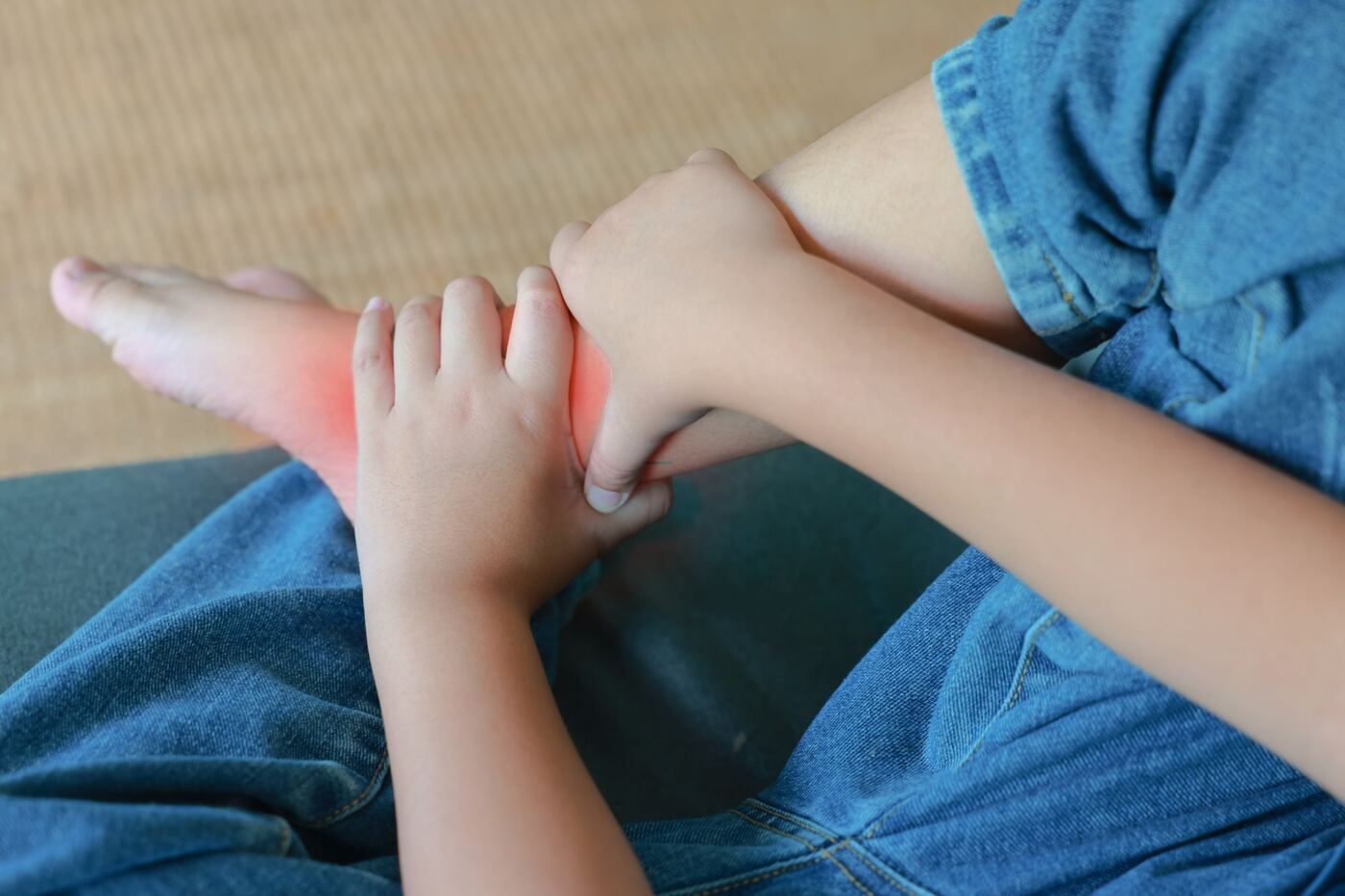
- Both legs, muscle-deep — a dull ache, throb, or cramp in the calves, shins, thighs, or behind the knees — not the joints themselves.
- Evening or night-time — often appears after an active day, and can wake a child from sleep.
- Gone by morning — a well, active child the next day, with no limp, swelling, or lingering pain.
Our Approach: A gentle, whole-body assessment
- Full history & observation — we start by listening: when the cramps happen, what they feel like, and what you’ve noticed helps or doesn’t.
- Gentle physical assessment — a careful, age-appropriate look at your child’s legs, joints, and overall posture and comfort.
- Gentle hands-on therapy — where appropriate, light, precise, age-specific techniques are used — nothing forceful, and always explained to you first.
- Practical comfort measures — simple, evidence-based strategies like gentle massage, warmth, and stretching that families can use at home
- A coordinated plan — we talk through next steps together, including when to involve other healthcare professionals
Comfort measures over medication
Clinical guidance generally recommends simple comfort measures — gentle massage, warmth such as a warm bath or heat pack, and reassurance. These are considered the mainstay of managing growing pains, rather than medication.2
Growing pains are also distinct from true muscle cramps and restless legs syndrome, which have different patterns and, occasionally, a genetic link worth mentioning to your healthcare practitioner if there’s a family history. This link was recently supported by an Australian twin family study.4
Frequently Asked Questions
Is this care appropriate for young children?
Care is gentle and specific to a child’s developing body, and is adapted for age and presentation at every visit. If you have any concerns, we’re happy to talk them through before your first appointment.
Do I need a referral?
No referral is required, though if your child has an existing healthcare practitioner involved, we’ll usually ask about that care so we can work alongside them rather than in isolation.
Does massage or a warm bath actually help?
Yes — gentle massage, warmth (like a warm bath before bed or a heat pack), and reassurance are the standard first-line comfort measures recommended for growing pains.2
What about vitamin D or other supplements?
Some research has looked at vitamin D supplementation for growing pains, but any supplementation is best discussed with your healthcare practitioner first, particularly around correct dosing for your child’s age.2
How long will this last?
Growing pains can come and go over months or even years, often with stretches of weeks or months with no symptoms at all.3 Most children grow out of them by their teenage years.
How many visits will my child need?
This varies for every family and is discussed openly during your visit — there’s no set program applied to every child.
This page is general information only and is not a substitute for individual healthcare advice. If you have questions or concerns or your child is in general very unwell, please contact your healthcare practitioner promptly.
References
- Evans AM, Scutter SD. Prevalence of “Growing Pains” in Young Children. J Pediatr. 2004;145(2):255–258. (University of South Australia) pubmed.ncbi.nlm.nih.gov/15289760
- Evans AM. Growing Pains: Contemporary Knowledge and Recommended Practice. J Foot Ankle Res. 2008;1:4. (La Trobe University, Melbourne) pmc.ncbi.nlm.nih.gov/articles/PMC2553776
- The Royal Children’s Hospital Melbourne. Orthopaedic Fact Sheet 18: Growing Pains — typical course and home management. rch.org.au/uploadedFiles/Main/Content/rheumatology/Growing_pains.pdf
- Champion GD, Bui M, Sarraf S, Donnelly TJ, Bott AN, Goh S, Jaaniste T, Hopper J. Improved Definition of Growing Pains: A Common Familial Primary Pain Disorder of Early Childhood. Paediatr Neonatal Pain. 2022;4(2):78–86. (Sydney Children’s Hospital / UNSW, using Twins Research Australia) pubmed.ncbi.nlm.nih.gov/35719219
Let’s talk about your child, specifically.
Every child’s concerns look a little different. The best next step is a free, no-obligation phone call — or, if you’re wondering whether it’s worth a second opinion, our two-minute check can help.
Not ready to book? Request a call back about your child’s night-time leg cramps
Fill in this form to request a call back about your child's night-time leg cramps and Dr Bhuta or the team will be in touch as soon as possible — usually within one business day. No obligation, no email sequences.
Please don’t include detailed medical information here — we’ll take a full history when we talk. See our Privacy Policy.